| CITROËN BX do-it-yourself |
|
|
Electrical modifications and additionsXenon headlightsYou won't find any such replacement headlight unit for the BX. Xenon bulbs are not simply bulbs to replace traditional halogen bulbs with but a completely new technology requiring a special controller operating at very high voltages. As such, they are in no way compatible with halogens, neither electrically nor physically. In addition, High-Intensity Discharge (HID or Xenon) units are designed to be low beam only (all HID-equipped cars use regular halogen bulbs for the high beam because it takes some time before the discharge reaches the steady phase). As a consequence, you cannot use HID-lamps in single headlight units fitted with H1 (double-filament) bulbs originally. On the other hand, to the XM, you can fit a Xenon replacement. Higher wattage bulbsA common idea is to use overwattage (100/50 or even 100/80 W) bulbs. The main problem is the additional heat generated which can harm the reflector and the housing. If you decide to experiment with them, an additional relay is absolutely required as the switch on the dashboard is not expected to handle such high currents. Don't forget about thicker wires and appropriate fuses, either. And even before that, you can consider what Julian MARSH wrote: "I am using Ring Xenon H1 bulbs in my XM; these are regular H1 lamps which employ xenon rather than halogen as the gas. According to Ring, they are 30% brighter than regular bulbs. Using an exposure meter, I reckon they are about 25% brighter. Wattage is unchanged and they don't seem to run any hotter." Whatever bulbs you decide to use, the first step should be to install the relay in the circuit. It is essential with high wattage bulbs (without it the dashboard switch will melt in due time) but also very much advisable with the smaller ones. Wires always have resistance that eats up part of the voltage applied to them. The wiring from the battery going to the dashboard switch and then all along the engine bay to the lamps in the front is long enough to make the voltage actually reaching the bulbs drop by as much as 3 volts, reducing its light output very significantly. The modification is rather simple. Find a customary Bosch-type relay and secure it to the inside of the front wing somewhere behind the left headlamp. Cut the wire going to the headlights and connect both new ends to the relay: the one coming from inside the cabin to the control coil of the relay, the other end going to the bulbs to the switched contact of the relay. You'll also need two additional wires: one to connect the opposite end of the control coil to the ground, and a second to connect the fourth pin of the relay directly to the battery. This last wire should be thick and as short as possible. Don't forget to put a fuse into this wire as well. Measure the voltage accross the bulbs before and after the operation: it goes up from around 11 V to 13.5 V, resulting in a nice boost in light output. But either overwattaged bulbs or only brighter ones, more light will certainly cause more disturbance to ongoing traffic. The best way to have more visibility without disturbing others would be the front foglights as they are much lower than the headlights, are as strong as the high beam and project roughly parallel to the road surface. However, in many countries the legislators banned this in clear weather. What can be suggested without reservation are the dichroic bulbs manufactured by Philips, Osram and other companies: the bulb itself shows a strange blueish-yellowish reflection but when lit, it casts a very strong yellow light. Much better than the common white one in rain, fog or snow (not to mention the trendy but completely uses bulbs with blue tint), but I personally prefer them on dry roads, too. And they add a nice distinctive touch, and isn't this the reason why we drive Citroëns in the first place...? Modifying Break rear lightsOn the Break (Estate) models, the rear combination lights are smaller than on the Berline (Hatchback), lacking the independent stop lights. Instead, the tail and stop lights share the same bulb, the second one being brighter. If you would prefer these important lights to be separate so that people driving behind you can see better when you brake, all you have to do is to swap the function of the original stop lights and rear foglights. This is best and most easily done by swapping the wires leading to the rear combination lamps. You don't change anything else in the wiring, so there is no need to think about appropriate fuses, etc.—everything else remains the same.
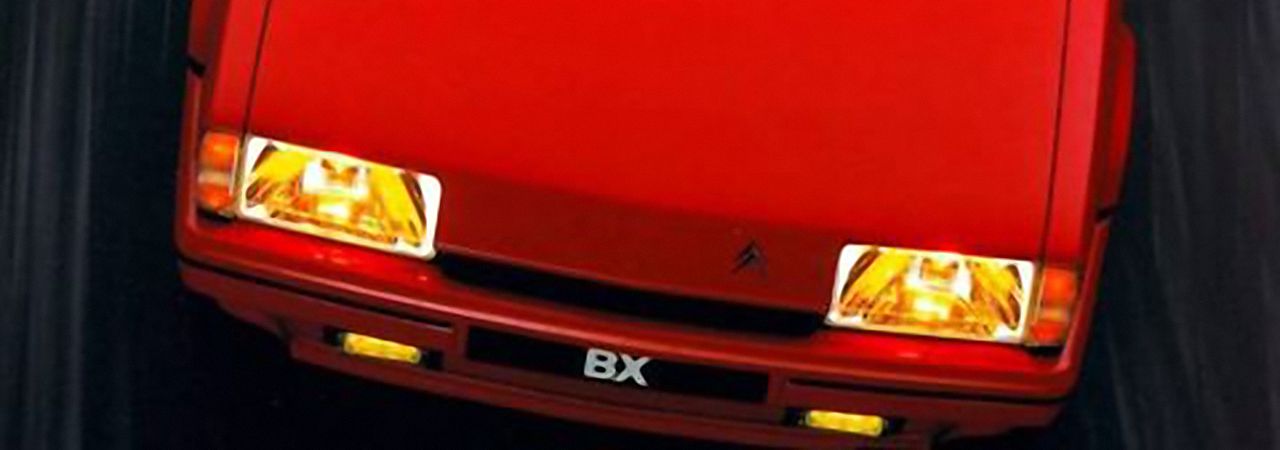
After opening the tailgate, locate the two screws holding the left combination light. Undo them and remove the lens, freeing it from the positioning lug at the base. Then remove the whole light assembly by undoing the securing screw. Locate the flat cable coming from the side of the car and going into the light assembly. Wires #1 and #5 should be cross linked. The simplest way would be to separate them from the other wires, cut and reconnect them. A less destructive solution is to find a similar plug and connector in a salvage yard (7-pin on post-86 cars and 6-pin before that) and build a small additional cable with the necessary wires swapped. Then the modification can be undone at any time by simply removing the additional cable. The cable coming from inside the car reaches the left combination lights first and then goes over to the right side. As we change the wiring before the left lamps, the changed meaning will go through the other side automatically, so we don't have to modify both sides. From the same modification cable you can detour to the third stop light, if fitted. Headlights warning beepMany general car accessory stores and gas stations sell such tiny units (they generally look like a tiny beeper with two or three input wires). Naturally, the package describes how to install them properly. However, you can build your own, too. There are many simple circuits to this end, but here's one I liked the best, mainly because of one reason: when your car is left alone, this circuit is switched off completely while many other solutions draw some (albeit small) current for their switching transistor. This is not really important while the circuit is operating perfectly, however, if the switching element becomes shorted, it will blow the fuse or flatten the battery. You need a standard (so-called Bosch type) relay as those used in many places in a BX (cooling fan, electric windows, front foglight, etc). They are cheap and very easy to get. When the ignition is on, the relay is always switched on (it can withstand this, the cooling fan and other relays do the same). Once the ignition is turned off, the relay releases its contacts which close the way from the headlights to the buzzer. For a buzzer, you have several options. Either buy a simple piezo buzzer at a common electronics parts store (choose one with an integrated oscillator which works only with the 12 V connected) or buy a second relay and use it as a buzzer. Granted, this is a nasty abuse of a relay but it won't suffer too much as you will turn off the headlights within a few seconds. And its sound is not that musical, either. Retrofitting the front foglightsYou will have to buy several parts, some of them new, some possibly from a salvage yard. First of all, you will need the lamps themselves. Cibie/Valeo manufactures the original (OEM) lamps used on AX, BX and Series II CX. Be prepared for the price they ask for them... If you are fortunate enough to find them in a salvage yard, examine the mirror behind the bulbs carefully: if they are already worn, leave them alone. The lamp assembly sits in a plastic housing that snaps into the front bumper. All bumpers are born equal, there is no need to buy one from a TZx or GTi: just saw off three grille bars on each side. The lugs holding the plastic housing are already there. You'll also need the switch for the dashboard (it's originally located in the panel above the casette holder, two blind panels cover the opening for both the front foglight switch and the switch of the electrically operated door mirrors). You can also find the multiwire connector attached to it in a salvage yard (the connectors are the same for this switch and the four others in the instrument panel facia: rear window demister, rear foglight, hazard lights, rear window washer/wiper; so if you find one of those it will do nicely). Without this connector you can use individual spade connectors but number or color code them to avoid trouble if you have to remove the switch later. If you cannot find the lamp units or find them prohibitively expensive, shop around for universal foglamps. Raydyot (Warley, United Kingdom; phone: +44 121 559 2471, fax: +44 121 561 1415), for instance, manufactures high quality lamp units sold for the fraction of the Cibie price, some of them fit quite nicely into the BX bumper (with or without the original BX plastic housing; in the second case, secure the lamps to the body parts behind the bumper, not the bumper itself). You may also find a switch from a different car make or even use a simple tumbler switch. Some foglamp kits come with a switch and relay included. To protect the switch from the high current used by the lamps, you'll also need a standard Bosch-type relay, possibly with a socket from a salvage yard (many such relays are used in the BX, use the connector of any of them). And finally, have a 20 A fuse and a fuse holder ready.
The diagram we present is practically equivalent to the original factory setup, with two notable differences. The first is the fuse. Citroën, for unknown reasons, decided to omit the fuse in the foglight circuitry but you should never, never install any electrical appliance in your car without the proper fuse. Period. By the way, the headlights are also unfused by birth, so you could take this opportunity and install the appropriate fuses there, too (however, you should fit them inside the cabin where there is still one wire; in the engine compartment this feed is already forked into two wires so you would have to fit two fuses there, although this setup also has its advantages). The second difference is in the layout of the earthing. The original setup grounds the right foglight behind the battery while the left one goes back into the cabin, to the main board. The reason for this escapes me. You can simply use either of the grounding methods shown on the diagram: either earth both lamps with a wire routed back to the main earthing point behind the battery, or just make a short detour behind the left headlamp to go down to a ring terminal secured under the horn supporting bracket bolt. However, for this second solution you'll have to remove the bumper, while in the first case you don't have to (not even to install the lamp units). If you want the modification to look absolutely original, look for 20-30 cm of the wiring harness tube—those black plastic tubes, cut along the side, that house the wiring harnesses everywhere in the engine compartment. Apart from all these, only standard odds and ends like wires, spade and ring terminals, insulating tape are all you need. In the engine compartmentRemove the battery to avoid accidental shorts while you install everything and to gain access to the wiring that goes beneath it. Remove the black pastic grille in front of the radiator (it is secured by three screws). This clears enough room to route the wiring inside harness D (see the diagram), located under the upper edge of the bumper. Crimp or solder spade terminals to the wires, connect them to the right foglamp and fit the lamp and the housing into the bumper. Make the detouring wires for the left lamp and connect them similarly. You can secure the relay to the inside left wing, in front of the suspension sphere. On the side wall you can find holes perfectly suited to secure the relay with a screw. Route the wiring of the relay in a harness tube (C). You may cut a small opening on the tube to accommodate the fuse holder and the fuse, as illustrated on the diagram. In the cabinYou have to go through the bulkhead with the wire placed into the wiring harness A beneath and behind the battery. Find a few feet of rigid wire and squeeze it through the rubber grommet where all other wires cross the bulkhead (there are three holes around there, one for the wiring harness, one for the accelator pedal cable and one for the speedometer cable). Take care not to damage the existing wires or the grommet—and be prepared, it might be quite difficult to get that wire through. When done, attach or solder the new electric wire to the end of the rigid wire and pull it through the opening. You might want to add another wires later as this is the logical place to travel between engine and cabin, so do yourself a favor and pull two wires through the opening: the second one can be only a small piece just crossing the bulkhead not connected to anything; just leave it there to help you the next time you need it. While still out of the car, join the wires of the switch multiconnector as shown on the diagram. Finally, you'll have three wires leaving the connector, one connects to the wire coming from the engine compartment (don't connect this yet), the other two tap into the appropriate wires beneath the dashboard. The feed and the return of the bulbs in the facia switches (which glow in the night when the headlights are on so that you can find them easier) goes up and down right behind the foglight switch, stretching between the mainboard (the one with the fuses and relays) and the instrument panel surroundings. Locate those wires in the wiring spaghetti and tap into them as indicated on the diagram. With the wire going through the bulkhead still not connected, check the functioning of the switch. When you turn on the sidelights or headlights (the foglights are allowed to work only when the front lights are on), the switch should glow and when you switch it on, it should light up brightly—even if the rest of the circuit is not yet in place. If it doesn't work, check the wiring and the switch before you go on. Finally, connect the last wire and check that your new foglights operate perfectly. Put yellow bulbs into the foglights even if you don't like them as your headlight: in rain, fog and snow they are much better. | ||||
|
Webmaster: Gábor DEÁK JAHN. Visitors: 235,509 Page hits: 607,367 Since: June 5, 2003 |