| CITROËN BX do-it-yourself |
|
|
MaintenanceBefore purchaseAs you would expect, Series II cars are a better buy; not only because they are younger but the newer series were significantly more reliable than the first one—at least this is what data collected by roadside emergency services like that of the German Automobile Club ADAC shows. Look for a trailer hitch or the remnants of one. If you find one, don't buy the car. Even if you want to tow something yourself, it's best to find a vehicle that has never towed anything in the past. Check the tires. Tires that are worn unevenly could be the result of something as minor as underinflation or poor alignment but they could also indicate that some parts in the suspension need to be replaced. Don't forget to check the spare tire as well (it is situated under the trunk, release the bolt inside the trunk with the wheelbrace). Check the windshield and other window glasses for cracks. A small crack frequently becomes a large one over time. Check the glass of the headlamps and front foglights as well. Check the chassis and engine numbers to see that they match with the papers. You can calculate the actual production date of the car by looking at the organization number.
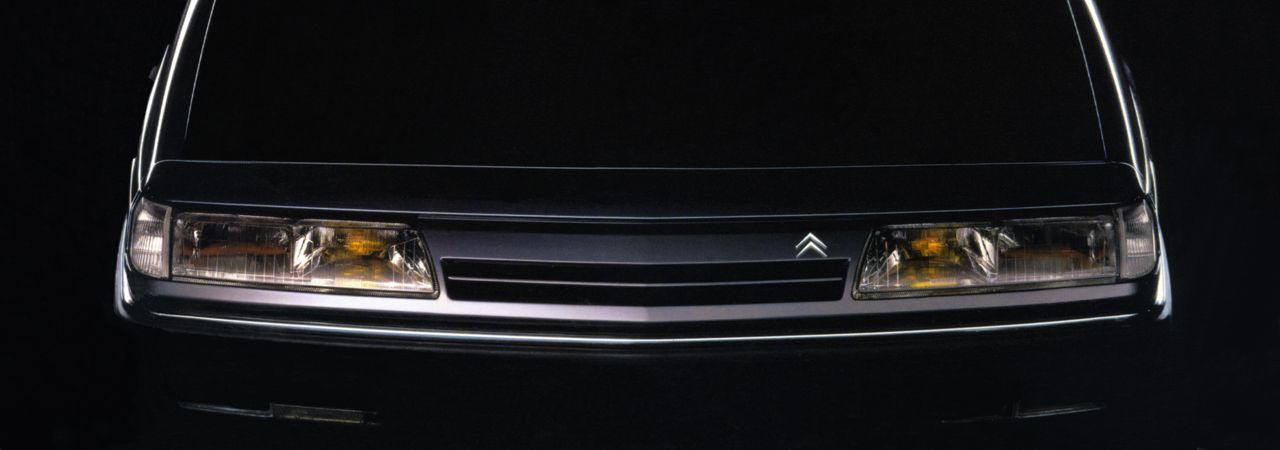
Examine the car from a distance of a few meters. Look for uniformity in the color of the paint. Then check it again closely. Cars six years old and newer should not have been repainted. You can check for repaints by looking for non-matching colors or overspray (paint that bleeds over to door handles, bumpers, mirrors and other places where factory paint would not originally appear). Some repaints are very hard to spot—look carefully in various places all over the car. If you find that a trunk or door has been re-painted, that's no reason to automatically panic. Accidents do happen. If you find overspray in different areas of the car, it's safe to assume the car has had a paint job. If you find paint work in the front of a car, it's probably best to find another one: all Citroëns have front-wheel drive and a head-on collision might have badly damaged some parts. Between the black, plastic front grill and the radiator, in front of the engine compartment, there is a cross panel painted in the color of the car body, housing the hood lock as well (see the picture above). The factory glued stickers on it originally (a multilingual warning and stickers specifying the recommended TOTAL fluids). If those stickers are missing, the front might have been repaired and repainted. If in doubt, ask a reliable car mechanic to see whether everything was repaired as it should have been. Rust should not be a problem on a BX unless it was neglected or some repairs were carried out without paying attention to prevent rust formation. However, check the body, particularly at the bottom of the front wings, the bottom of the doors, on the underside of the body. Some cars have problems with the top hinges of the front door and the area above that. Check the front and rear subframes as well. The exhaust system tends to become rusty over time, it is not too expensive to replace some parts later. Check that the different body parts are symmetric: bumpers, wings, lamp units should align the same way both on the left and right. If you are at a used car lot having several BXs on display, compare the selected one to the others. The bumpers are not fixed with screws all around, the corner wings are held in place by plastic clips. A little free play is acceptable but really loose bumpers warn of a past accident. Check that the doors and windows fit closely and are easy to open and close. A door that fits unevenly may indicate rust, neglect or even a collision. Open the driver's door half way and try to lift it to see if the hinges hold the door tightly. The upper hinges of the front doors are known to be a weak spot. Check the rubber sealing all around the door openings. Look inside the car. Look for excessive wear or tear, but you're not likely to find any (a common piece of advice is to have a look at the clutch and brake pedals but these rubber pads are so cheap and easy to replace...). Look under the floor mats and seat covers, check the upholstery and compare the shape of the seats on both sides, the driver's seat might be much more worn than the other. Make sure the seat is comfortable and that it adjusts to your needs. It should slide forward and backward easily but not loosely. Examine and fasten the seat belts and make sure they are comfortable and snug. Open the glove box and spend some time looking at the repair history and owner's manual. Take your time. Check the dates of repair against the kilometers you see on the odometer. Check for what was done and what was recommended. Look for regular oil changes and inspections. Check the battery connections to see that they are clean. Check the oil level to see that it is normal. Oil with a whitish, milky appearance, or with white bubbles, can be a sign of major mechanical problems. Check the coolant fluid; it should not look rusty. Check for leaks and stains under the car, on the underside of the engine, and around hoses and valve covers. Pre-1985 models often have oil leaking from the engine and gearbox. Pre-1986 models often have coolant leakage. Check whether the ignition key is worn. Start the car. Immediately after the car has been started, check the dashboard. The warning lights of the charging and oil pressure should go out immediately. If the vehicle has ABS, its warning light should go out telling you that the system is functioning. The engine management system warning light works the same way. Sit inside the vehicle for a minute while it warms up. Now it is a good time to try the horn, the signals, the lights, windshield wipers and other electrical items. Play the radio if you'd like to check out the sound system. Try the heater or the air conditioner out but turn it off before going for a test drive to see how the car performs without the latter. With the engine idling, check the different height settings of the car. It should sink and rise without creaking and without stopping and jumping. Test the suspension spheres. Check the main accumulator (the central sphere behind the radiator) and, if power steering is fitted, the flow distributor valve for leaks. The system normally ticks about once in a minute or even less frequently (measure it with nobody sitting in the car and the engine idling). However, older cars quite commonly have an increased ticking frequency (5 to 10 seconds between ticks). Although this does signal that some parts of the system are worn, the car may perform well for quite a long time, at most with minor repairs over time. However, if the ticking is extremely frequent (1 to 2 seconds between ticks), the main accumulator is underpressurized or even faulty. After the car has warmed up, check the exhaust pipe. Check for blue smoke that smells burnt. That's bad, and move on to another car if you see or smell any of that; it means that oil is being burned. As a motor warms up, any emissions or water in the exhaust should gradually disappear. Don't buy a car that throws water out the exhaust pipe after it is fully warmed up. It means there is water in the system where it's not supposed to be. Black, gummy soot in the exhaust pipe may mean worn rings, or bad valves, and expensive repairs. Check the clutch. There shouldn't be any free play, and pressing the pedal shouldn't be too firm. Engage and disengage it several times with the engine idling in neutral and listen for suspicious sounds. If the engine speed drops when the clutch is disengaged, the crankshaft bearings might be at fault and you'd better leave the car alone. Put the car into third gear, apply the handbrake fully, rev the engine up to 3,000-3,500 rpm and release the clutch pedal suddenly. To be on the safe side, be sure that nobody is standing in front of you. If the engine stops immediately, everything is OK. If it goes on, the clutch slips. If the car moves, the handbrake is weak. When you make a test drive, listen for rattles, squeaks, and wind noise with the windows up, as well as for engine noise: unusual sounds may be signs of major trouble. Observe the oil pressure and coolant temperature meter or warning lamps during the test. Drive over rough road surfaces and watch for unusual vibrations, noises, or odors. Make several stops and starts, at varying, but safe, rates of speed on a clear, level road surface. The car should accelerate smoothly and should brake without grabbing, vibrating, or pulling to one side. When you step firmly on the brake pedal, it should feel firm, not spongy. If you haven't driven a Citroën before, be careful at first. These cars have wonderful brakes but somewhat different from other cars: it is a so called zero travel type: not the travel of the brake pedal but the pressure on it governs the action of the brakes. For the uninitiated it might seem too harsh at first sight. It is not uncommon for the brake pads to clonk loudly when you apply the brakes while reversing. It is generally only a nusiance, not a real problem. Check the roadholding at 100-120 kmh, wobbling or pulling to one side is bad. Press and release the throttle pedal a few times and look into the mirror to see if there is smoke from the exhaust pipe. Try turning at various speeds. Too much sway or stiffness can mean suspension problems. Turn the wheel all the way from one side to the other; power steering should feel smooth, with little or no squealing. Listen for suspicious rattling and squeaking. The steering should feel firm but not stiff. Check the wheels for "dog-tracking"—have someone stand behind the car as you slowly drive away—if the top of the back wheels head inwards, the rear arm bearing need to be replaced. Unevenly worn rear tires warn of the same problem. Look for these signs of odometer tampering: white lines between the numbers that do not line up, or vibration of the 1/10-mile numbers while the car is moving. When you stop the road test, leave the engine idling and check the wheels for excessive heat from the brakes. Look under the hood to check for oil and coolant leaks. After purchaseFirst, congratulations! You'll soon find out that there are only two kinds of car drivers: those who drive Citroëns and those nincompoops who don't... :-) Start with a major cleanup of all compartments: clean the carpets, under the front and rear seats, in the trunk. Clean the exterior, the wheels. Check the car body thoroughly for scratches, small dents and rust. Rust should not be a problem on a BX unless it was neglected or some repairs were carried out without paying attention to prevent rust formation. Repair as necessary. If the car is equipped with a catalytic converter, take care of the general precautions: you should avoid all situations where harmful substances could reach the converter. To summarize: to avoid unburned fuel overheating and destroying the converter, do not push or tow start, do not use the car with too rich a mixture (have the air cleaner, fuel filter, spark plugs cleaned and renewed as required), do not allow the engine to misfire, do not switch off the ignition at high speeds (in particular, do not blip the throttle before switching off). To avoid unburned carbon deposits, do not allow the engine to consume engine oil excessively. To avoid other harmful substances, do not use fuel or engine oil additives. To avoid lead, use only unleaded fuel. Also note that the converter becomes very hot in service. Do not park the car over long grass, piles of dead leaves or other combustible materials, especially as it will lower itself when the suspension is not under pressure. Replace (or have it replaced) the camshaft belt, unless you know the previous owner personally and can trust him/her if he/she says that it had been done recently. The belt is relatively cheap but the damage it can cause, should it fail in service, can be catastrophic (the least damage is a broken camshaft but it can destroy the whole engine easily). Also, replace the radiator filler cap. It is cheap and its spring loses its strength over time, leading to engine overheating and possible engine damage. If your engine overheats, even if it's only the pre-warning lamp (yellow or flashing light, or temperature between 95-100 °C) take it very seriously and track down the failure. These engines are not supposed to reach this temperature, not even sitting in a traffic jam in a hot afternoon, hence, every overheating signals a failure that should be paid attention to. These problems, if found and rectified early, are relatively cheap, but blown head gaskets, warped engine heads and other major failures caused by repeated or prolonged overheating, are definitely not. Replace some (or most) of the liquids. The engine oil should be changed immediately. I would suggest fully synthetic oil, the price difference today, although still present, is not that huge, and its broader temperature range and stable viscosity help keep your engine in good condition. Of course, if the engine is consuming too much oil, this wouldn't be an economic solution, but excessive oil consumption is a failure that should be repaired anyway. If you had no previous experience with Citroëns, you might be surprised, but these engines, if they are in good condition, practically do not consume—or only a very small quantity of—oil between regular oil changes (every 10,000 km by factory recommendation, every 7,000-8,000 km if you want to be perfectly sure and don't mind the additional expense, every 5,000 km would already be a little paranoid). Check your oil consumption carefully in the first period to see if there is some work to do on the engine. There is one thing of utmost importance when repairing any hydropneumatically suspended Citroën:
never do anything under the car, especially not any work on the suspension, without the car safely supported on axle
stands, lifted with a car lift or standing over an inspection pit. Even over an inspection pit, always allow the extra
distance for the body to lower itself. Never rely on the height lever set to highest setting or only on the jack
provided with the car to change tires. Don't let anybody sit into the car while you work under it (eg. by locking the
doors). If the car drops abruptly, it can crush anybody to death in a second. This is not over-anxiety: it has already
happened. Don't let it happen to you!
The coolant should have been drained and renewed every second year. However, most owners never do this. Hence, it would be a reasonable decision to flush the radiator and renew the coolant as well. But even if you decide against it, have the freezing point checked to see its condition—many garages or gas stations check this for a small fee or even free, or you can buy a simple meter at general car accessory stores to check it for yourself. When you have the coolant drained, do not forget to check the cooling fan temperature switch (screwed into the radiator, bottom right) whether it makes and brakes at the specified temperatures. Also, a cheap part, easy to replace, and tends to go wrong over time (especially when the low speed resistor on 16 and 19 engines—an aluminum cylinder right behind the left headlamp—is missing or failing) causing engine overheating. If you have the service records and they show that the transmission oil is not yet near the end of its expected lifetime, you can leave it alone. If you have to change it, buy mineral oil. Synthetics are perfect for the engine but are a bit too thin for the gearbox of the BX, resulting in less smooth a gearchange. The LHM (the hydraulics liquid) deserves some attention, too. Start by cleaning the filter in the reservoir. If the LHM already looks yellowish instead of bright light green or if you want to be sure (and especially if you found any greater amount of dirt in the filter), flush the system. Do this before anything else if you suspect that the ride comfort is inferior to what can be expected from a BX (unless you found an obvious failure in one of the suspension components). Spark plugs and air filter are also natural candidates for renewal (but clean them at least). Clean the distributor cap and rotor. Clean the connectors of the ignition coil (on most BXs the coil is located right behind the battery; the fumes emitted by conventional batteries often corrode its connectors). Check the tires for thread wear. Check the condition of the brake pads and disks. Although the front pads have a warning lamp in the instrument panel, don't count on it—after a few years, the switch will probably be out of order. Check the rubber bellows on both ends of the driveshafts: if they start to crack, they can be replaced for peanuts. If they stay open for a while and allow the grease to escape and dirt to enter, it will be much more expensive. Examine the engine and transmission carefully for oil and coolant leakage. If you find none, clean the engine and transmission (if everything is perfectly clear, you might suspect that the previous owner wanted to conceal something leaking. But then it might mean that he or she just liked the car to be clean...). Check all rubber hoses, gaskets, seals and belts, tighten the retaining clips of hoses if necessary. Drive the car for a week or so and carefully check for leaks at hoses and gaskets. Remove the lens of the rear combination lights. Clean the lens from the inside, the bulbs and the reflector surfaces with soapy water. Renew the bulbs if they are already discolored. If you still have patience, go methodically through every electrical connector in the car, disconnect, clean, treat with a contact cleaner (not WD-40!) and reconnect. Don't forget to clean the grounding points as well. This can help avoid many annoying problems in the future. And, in the future, pay attention to the activities described in the regular maintenance table. Regular dutiesThe following table lists the basic factory recommendations. You are free to check, clean and renew the items mentioned here more often than stated, however, you shouldn't do that less often.
Have a look at your tires very often: once a day, if possible. The BX—like other Citroëns—has a very well engineered suspension. A tire puncture often goes unnoticed and a blow-out on a highway is also nothing as dramatic as in other cars. While this is good news for your safety, an unnoticed tire puncture could easily ruin the tire if you drive it for a longer period of time. Some items of the following checklist were originally included in the previous factory list. However, as practice shows, it is much more convenient to deal with these smaller items during a regular spring and fall cleaning and checking than to follow the odometer. If you drive significantly more than 15,000-20,000 km a year, repeat the procedure more often.
Before winter, check the body and the underside of the car for paint damages and rust formation. Clean and repair (start with rust inhibitor then cover with prime and paint) immediately to prevent humidity and corrosive agents from damaging the car during the winter months. Check the freezing temperature of the antifreeze coolant mixture. Next spring, recheck the body to see if the winter did any damage and if so, repair it immediately. Secrets of ORGAThis number shows the day when your BX was actually assembled on the production line. The dealers and parts stores use this number (often called ORGA or RP number, this latter stands for Replacement Parts) to identify the various parts and components fitted to your car. You'll find this number either in the engine bay, in front of the left front suspension sphere or on the A-pillar, in the door opening, below the hinge. Calculating the production date is very easy using the following table. Locate the largest number in the table still less than or equal to your organization number. To see an example, let's assume the number is 3514. Then the largest number will be 3491 in the cell June 1986. Just subtract this number from your organization number to get the day of the month of the production of your BX (in our example, 3514-3491=23 yields June 23, 1986). If you receive the non-existent date zero (this happens when your organization number is not greater than but equal to the number in the table), simply take the last day of the previous month (eg. organization number 5013, largest number in the table is 5013 in the cell August 1990, subtraction results in zero, hence the production date is July 31, 1990.)
Or, alternatively, use any spreadsheet, database or similar program that allows arithmetic operations carried out on dates. Add your organization number to the date November 8, 1976 and the resulting date is the production date of your car. As a third method, if your browser understands and executes JavaScript scripts, just enter either the organization number or the production date into the fields below and press the appropriate button to make the conversion (this form only accepts valid dates, bad input will be automatically corrected): Here is a more complicated and clever form that can help you if you don't know all digits of your ORGA number (some of the digits might be illegible or sprayed over). Just provide the digits you know and leave the other ones empty, then specify the year of production. If you are unsure of the year but you can read the first digits, use the previous form to make a guess. When you press the List possible dates button, you will receive the list of possible production dates matching the fragment of your ORGA number and falling on weekdays—even Citroën didn't manufacture cars during the weekend... If you need to calculate the ORGA while in the field (for instance, looking for a car to buy), you can also use a WAP-based ORGA calculator offering the same features as the one above. It can be used from any WAP-compliant mobile phone or Internet browser. The URL is http://wap.psa.sysconfig.hu/orga.wml—store it among your phone's bookmarks. Although these pages belong to a Hungarian PSA Internet Forum, the calculator is available in English, too. Finally, you can download three small programs, to be used on your Palm OS powered handheld computers, Java-capable mobile phones or Symbian OS-based smartphones. It offers the same functionality as the online forms above: conversion to and from ORGA, plus the ability to list incomplete ORGA numbers. They are not freeware but reportware—they will cost you an e-mail if you don't find your mobile device already listed below. If you find the programs to either to run or not run on such a device, please, report it (see the webmaster's address below). And as usual: I didn't find them to make any trouble but make the necessary precautions first, backup your data or whatever.
| ||||||||||||||||||||||||||||||||||||||||||||||||||||||||||||||||||||||||||||||||||||||||||||||||||||||||||||||||||||||||||||||||||||||||||||||||||||||||||||||||||||||||||||||||||||||||||||||||||||||||||||||||||||||||||||||||||||||||||||||||||||||||||||||||||||||||||||||||||||||||||||||||||||||||||||||||||||||||||||||||||||||||||||||||||||||||||||||||||||||||||||||||||||||||||||||||||||||||||||||||||||||||||||||||||||||||||||||||||||||||||||||||||||||||||||||
|
Webmaster: Gábor DEÁK JAHN. Visitors: 253,152 Page hits: 650,208 Since: June 5, 2003 |
|||||||||||||||||||||||||||||||||||||||||||||||||||||||||||||||||||||||||||||||||||||||||||||||||||||||||||||||||||||||||||||||||||||||||||||||||||||||||||||||||||||||||||||||||||||||||||||||||||||||||||||||||||||||||||||||||||||||||||||||||||||||||||||||||||||||||||||||||||||||||||||||||||||||||||||||||||||||||||||||||||||||||||||||||||||||||||||||||||||||||||||||||||||||||||||||||||||||||||||||||||||||||||||||||||||||||||||||||||||||||||||||||||||||||||||||